


Aluminium Polishing
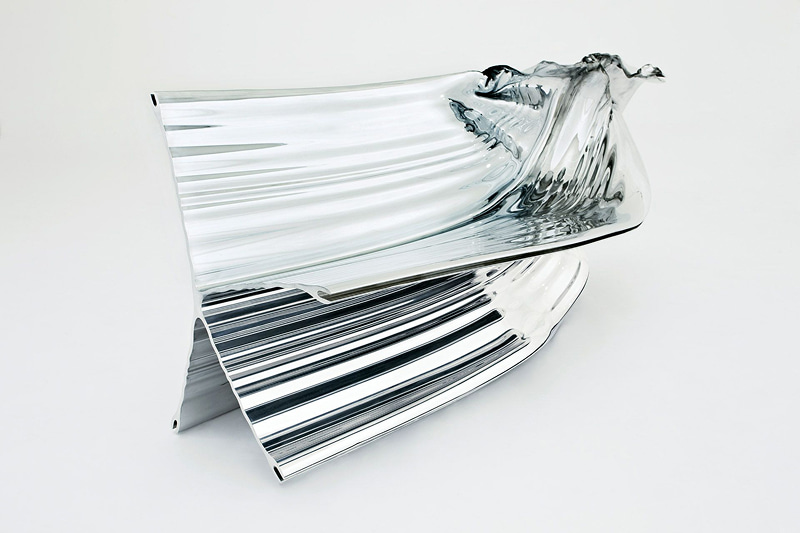 High Grade Metal Polishers are specialist aluminium polishers based in Dagenham, East London. We hand polish cast, extruded, sheet and fabricated aluminium for sculptors, architects, engineers and restorers, to every grade from a soft satin to a superior mirror, in our workshop
Aluminium has a reputation for being easy to polish. It is not. It smears under the wheel rather than cutting cleanly, it oxidises within seconds of being exposed to air, and a surface that looks bright on the bench can show every flaw under strong light or after anodising. A good aluminium finish comes from the right pressure, the full grit sequence and a polisher who knows when to stop. That is the job we do.
Contact UsWhat we polish in aluminium
- Sculpture and artwork
Cast and fabricated aluminium pieces for artists and foundries, including mirror finishes on cast work where the casting quality allows. - Architectural aluminium
Feature panels, cladding sections, handrails, window and door sections, interior fittings and signage, usually to satin or bright. - Engineering components
Machined and fabricated parts that need a specified surface finish for appearance, cleanability or the next process. - Restoration
Aluminium that has oxidised, dulled, scratched or been badly refinished, brought back to its original grade and protected. - Free-issue material
You supply the aluminium, fabricated or raw, and we finish it. We regularly work this way.
Why aluminium is deceptively difficult
Aluminium behaves differently from stainless steel under the wheel. Stainless fractures at a microscopic level as the abrasive passes over it. Aluminium smears. The material is ductile enough that it flows sideways instead of being cut cleanly away. A surface can look glossy after polishing and still carry subsurface roughness that only shows up later, often after anodising or under strong side lighting.
Then there’s oxidation. Aluminium forms an oxide layer within seconds of being exposed to air. Every stage of polishing removes that layer and lets a new one form immediately behind it.
Aggressive pressure doesn’t speed anything up. It heats the surface, disrupts the oxide unevenly, and produces a worse result than a lighter touch. A workshop that handles aluminium the way it handles stainless steel will produce a finish that looks acceptable at first glance and disappoints under proper lighting.
Alloy type changes everything
Aluminium is a family of alloys, not a single material. The alloy you’re working with dictates what’s achievable.
Wrought alloys in the 5000 and 6000 series are the most common in architectural and structural work. They polish predictably and take a bright finish well.
Cast aluminium is different. Cast alloys contain silicon and often have porosity in the surface. You can bring cast aluminium to a strong shine, and we have taken cast pieces to a genuine mirror where the casting quality allowed it, but it’s not something to assume at the specification stage. The internal structure of the material has to cooperate. Sculptors working with cast pieces should have that conversation with the workshop before the finish is written into the spec.
The softer 1000-series alloys polish easily but scratch just as easily. Anything shipped or handled after polishing needs proper protection, and any contact with the surface has to be planned for.
Before we quote an aluminium job we want to understand what we’re dealing with. That usually means a conversation about the alloy grade if the client knows it, the form of the material (cast, extruded, sheet, fabricated), and where the finished piece is going. Those three answers change the process from start to finish, and the conversation matters more than a form to fill in.
Contact UsFinish grades in aluminium polishing services
We work to the same named grades on aluminium as on stainless: Orbital Sand, Satin, Bright, Mirror and Superior Mirror. What each grade looks like in aluminium differs slightly from stainless, because the underlying material reflects light differently.
- Satin and Bright
Satin and Bright are the workhorses for architectural aluminium: window sections, cladding features, handrails, interior fittings. They read as clean and uniform, and they hold up under normal wear. - Mirror and Superior Mirror
Mirror and Superior Mirror on aluminium are specified for sculpture, feature panels and display work where reflectivity is the point. They take longer to produce on aluminium than on stainless because of the smearing behaviour. Skipping stages in the grit sequence, which some workshops do to save time, always shows up in the final finish. - Orbital Sand
Orbital Sand on aluminium gives a directional pattern that suits certain architectural applications, particularly where a warmer, less clinical look is wanted than a satin stainless equivalent.
What specialist aluminium polishing does differently
Aluminium suppliers’ polishing lines are set up for volume. Sheet in, sheet out, consistent grade, predictable output. For a run of standard extrusions to a satin finish, that’s the right tool.
Specialist workshop polishing is what happens when the job doesn’t fit that model:
- A sculpture with compound curves
- A restored architectural feature that needs to match adjacent original work
- A one-off where the client has supplied the material and the geometry is bespoke
- A piece where the finish grade is Mirror or Superior Mirror and will be seen at close range
Most of the difference is handwork. Complex geometries need to be worked by hand, section by section, with the operator judging the transition between areas. A flatbed line isn’t built for that. Handwork is also how mistakes get caught before they become defects. A skilled polisher sees a scratch or a smeared area developing and adjusts before it’s baked in.
We also work regularly with free-issue material, meaning the client supplies the aluminium and we finish it. That flexibility matters when fabrication has been done elsewhere or when a piece is being restored rather than made new.
Protecting the finish
A freshly polished aluminium surface is chemically reactive. The oxide layer will re-form within seconds, but in ambient conditions that new layer isn’t uniform, and it can dull the finish over weeks and months. Fingerprints etch. Coastal air pits the surface. Rain leaves marks.
The three options are:
- Lacquering
Lacquering gives an immediate protective coat. It has a finite lifespan and can yellow over time, so it suits interior pieces and short-to-medium term protection rather than long outdoor exposure. We don’t lacquer in-house, but we work with trusted partners and can arrange this as part of the job or refer you directly, depending on what suits the project. - Anodising after polishing
Anodising builds a controlled oxide layer over the polished surface. It’s durable and long-lasting, but it slightly softens the highest gloss finishes. For most architectural applications that trade-off is fine. For pure display sculpture where reflectivity is the point, it may not be. Anodising is also referred out to specialist partners. We’ll advise on who to use and how it coordinates with the polishing stage. - Ongoing maintenance
The third option is doing nothing at the point of finishing and maintaining the piece through periodic re-polishing. That suits interior sculpture that isn’t being handled. It doesn’t work for almost anything outside.
Where the piece is going and what the client will maintain determines the right answer. That’s a conversation to have before the job starts, not after.
Contact UsWhen to bring aluminium to specialist metal polishers
If the job is a run of standard extrusions to a satin finish, an aluminium supplier’s polishing line will handle it well, and probably cheaper than we can.
If the job is any of the following, that’s when a specialist workshop earns its place:
- A sculpture or piece of artwork
- An architectural feature or restoration
- A one-off with geometry that doesn’t sit flat on a bed
- A Mirror or Superior Mirror finish
- Aluminium that will be viewed at close range in a public setting
For these jobs, the choice of workshop shapes the finished result more than most people realise.
Contact UsHow an aluminium job workss
- Send us a photo, the alloy and form if you know them, the finish you want and where the piece is going.
- We assess the material and quote. If the job is better suited to a supplier’s polishing line, we will say so
- Pieces come to our Dagenham workshop, which handles items up to 10 tonnes, or we polish on site where the piece cannot move.
- We polish by hand to the specified grade, arrange lacquering or anodising through our partners if the piece needs it, and return or install the work.
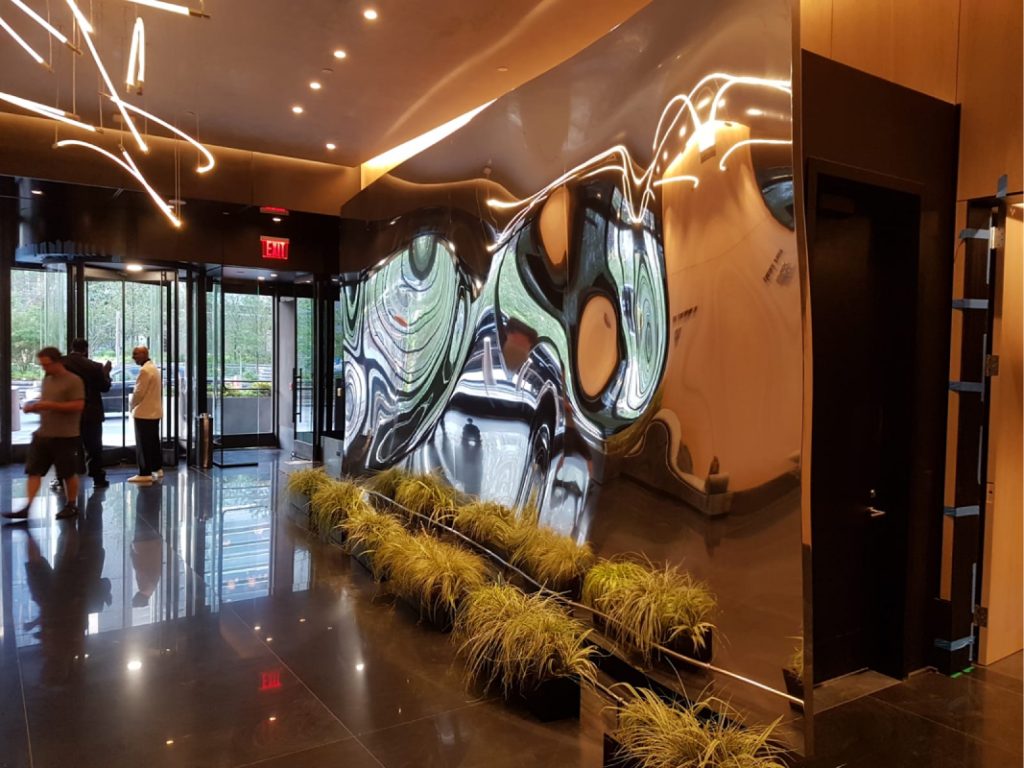
Recent aluminium work
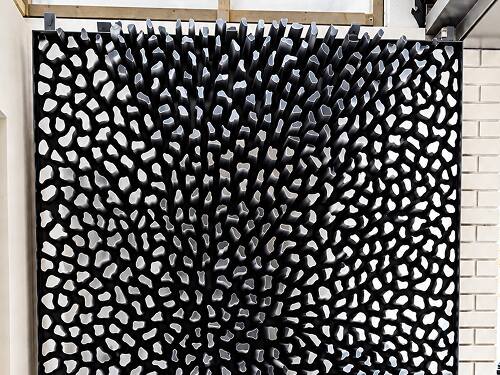
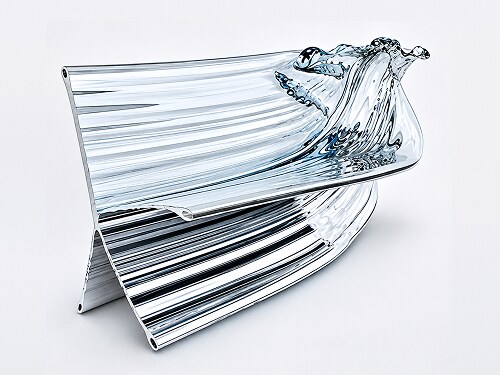
See more of our projects on the Our Work Page
Why High Grade Metal Polishers
We have been hand polishing metal since 2006, and our team has finished aluminium, stainless steel and bronze for some of the best-known sculptors and architectural metalworkers in the country. Most of our polishers have been with us from the start, with over 40 years of combined experience between them. The same polishers who take a ten-tonne sculpture to a superior mirror handle your aluminium panel or casting.
Frequently asked questions
Can cast aluminium be mirror polished?
Sometimes. It depends on the alloy and the quality of the casting. We have taken cast pieces to a genuine mirror where the casting allowed it, and we will tell you early if yours will not get there.
Can you polish aluminium before anodising?
Yes. Polishing before anodising is common for bright anodised architectural work. We coordinate the polishing grade with the anodiser so the final result is what you specified.
How do I keep polished aluminium looking polished?
Lacquer or anodise it, or plan for periodic repolishing. Bare polished aluminium dulls over time, and we will advise which option suits where the piece is going.
Do you take on small aluminium pieces?
Yes. Send us a photo and a line about what you want, and we will tell you honestly whether it is a job for a specialist workshop or better handled elsewhere.
Do you polish other metals?
Yes. We also polish stainless steel, bronze, copper and brass.
Contact High Grade Metal Polishers Today!
We’d love to hear from you! Whether you have a specific project in mind or just want to explore your options, feel free to reach out. One of our friendly team members will get back to you as soon as possible to discuss your needs.
Years in the industry
Countries
Happy customers
Projects worked on